Showing posts with label Chile. Show all posts
Thursday, February 18, 2010
Horcón & Maitencillo - The beaches of Chile
For our last week in South America we decided to spend some time relaxing in a couple of Chilean beach towns just north of Valparaiso. We spent the weekend in Horcón, a small fishing village, and then up to Maitencillo to a more resorty beach town.
Horcón is a cool, funky little town that, like seemingly all Chilean beach towns, is jam packed full of Chileans on the weekends. We stayed in a nice little place right on the ocean and spent our days lounging on the beach in whatever available real estate we could squeeze into. The beach was certainly crowded, but we seemed to be the only gringos there.
The town is an interesting fishing village in that, at least on the weekends, the fishermen need to be in with their catch before the throngs descend on the beach. This is due to the fact that the small beach is used to bring the boats in after the catch and horses are brought down to help pull the boats from the water.
The food selection is limited, but just about everyone sells very tasty seafood empenadas. Probably not the healthiest of diets, but we ate a lot of them!
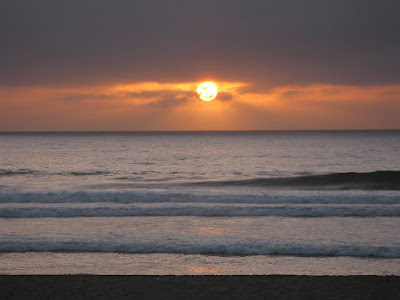
Things were seeming to calm down on Monday, but we decided to check out Maitencillo for a change of pace. Maintencillo is much bigger with a long stretches of white sand. We found a little place along the beach complete with a kitchenette. When the sun was out it was beautiful and the first day we had an amazing sunset from our cabana.
We had hoped to do some surfing here, but the water was very cold and board rental plus wet suit rental was a little beyond our budget. Instead we took some long walks down the beach in between the hours of laying on the beach and reading. On one of these walks we went to the fish market and picked up some clams. Leslie made a great white wine garlic sauce in our kitchenette and we enjoyed an extremely fresh clam dinner.
One final thing of note is the huge population of pelicans in this area of the coast.
Read more...
Saturday, February 13, 2010
Valparaíso and Pablo Neruda
Valparaíso is an artsy bohemian fishing town about two hours away from Santiago. It is also where poet Pablo Neruda had a home "La Sebastiana."
As we hiked the hill up to Pablo's home, Jim mentioned one of the cheesy jokes that Pablo liked to tell.
I responded "I know that's funny, but I'm just not laughing."
To which Jim recounted, "Hmm. Pablo Neruda said, 'Laughter is the language of the soul.'"
Leslie: "I am familiar with the works of Pablo Neruda."
All joking and Simpson's references aside, Valparaíso is a maze of small, curvy streets and stairs all steeply heading up the hill away from the coast. We had heard that the city was built with no "master plan" and so getting around the labyrinth is a little adventure.
It is also an electrician's nightmare!
Graffiti or street art is either encouraged or tolerated. So there is a combination of vibrant colored buildings with free art all over them. We spent most of our time walking around admiring the walls around the city.
Because of the city's uniqueness, it was declared a UNESCO world heritage site. Also their funicular elevators (highly-inclined cable cars) are one of the world’s 100 most endangered historical treasures as named by World Monuments Fund. (Who knew there was such a foundation!) We of course rode on the the funiculars to get around town.
For lunch we stopped by the fish market where there are restaurants on the second floor. It is hard to choose which to stop at as you don't want to show interest in any particular menu laid outside the restaurant because then you will be hassled by the waiters to come in. We did just finally choose a place and we had seafood empenadas (with razor clams, mussels and shrimp) and a huge bowl of ceviche.
Finally, we did stop by Pablo Neruda's home "La Sebastiana." It was the highlight of our stay in Valparaíso. It is unique and quirky just like the town and the poet, and through the audio self guided tour, it felt like you could actually see him sitting in his office contemplating the sea. Unfortunately, pictures are not allowed in the house so we only have pictures from the outside.
After a few days we were ready to get out of the congestion and craziness of the city and head for the beaches.
I responded "I know that's funny, but I'm just not laughing."
To which Jim recounted, "Hmm. Pablo Neruda said, 'Laughter is the language of the soul.'"
Leslie: "I am familiar with the works of Pablo Neruda."
All joking and Simpson's references aside, Valparaíso is a maze of small, curvy streets and stairs all steeply heading up the hill away from the coast. We had heard that the city was built with no "master plan" and so getting around the labyrinth is a little adventure.
Read more...
Monday, February 8, 2010
Santiago, Chile
We had a few days to hang out in Santiago before heading up the coast to the Chilean beaches. We checked into our hostel, La Casa Roja, which is probably one of the nicest hostels we have stayed in in South America. We met up with my friend Brea who is living in Santiago with her boyfriend. Here is Jim, our friend Maoz from Israel, Brea and her boyfriend, Matt, chilling by the hostel pool.
The hostel is a restored mansion with a pool, huge backyard, big stocked kitchen and just a ton of space to hang out in. We did do our far share of sunbathing and swimming.
We, of course, went out and checked out the city. We were in the Barrio Brasil area which has nice parks and restaurant-lined streets. Brea took us around on a little tour of the town and we headed to the fish market in the middle of town. Here, you can find all sorts of interesting and exotic fish.
As we were looking for the market a Chilean man helped us find it and told us that the hall was designed by Gustave Eiffel (of Eiffel Tower fame). I tried to look this up and found out that there is much dispute over this claim. Whatever the truth is, it is true that the fancy wrought ironwork was fabricated in Victorian England and shipped to Santiago.
Chile is not the culinary capital of the world, but it does have some interesting foods. As many people know (and possibly to the consternation of Jim's stomach) I love street foods. I read about one of Santiago's most famous street foods and had to try it: The Completo.
Yes, the Completo is a hot dog topped with tomatoes, guacamole and a ridiculous amount of mayonnaise. Another infamous street food is the pobre. The pobre is a giant plate of fries topped with grilled onions, a steak or sausage and a fried egg.
There are also some very fascinating takes on pizza. (yes that piece on the far left looks like just layers of overcooked roast beef??)
We also found ourselves in Santiago for Super Bowl Sunday. Though we haven't seen any games since October, we thought it would be a fun taste of home for a night. We joined Brea and group of her friends to head to a bar that was showing the game. It may have been the only bar in Santiago showing the game as it seemed everyone in the city interested in it was crowded into the bar. This is despite the fact that the Super Bowl wasn't even mentioned in the local sports section in Santiago that day. Our friend Maoz joined us as well and it was funny trying to explain Futbol Americano to someone who had never seen a game.
Santiago is one of those places where most people just stop through on their way to someplace else. In our opinion they are missing out. Santiago is a great city with many friendly people!
![]() |
![]() |
There are also some very fascinating takes on pizza. (yes that piece on the far left looks like just layers of overcooked roast beef??)
Santiago is one of those places where most people just stop through on their way to someplace else. In our opinion they are missing out. Santiago is a great city with many friendly people!
Read more...
Friday, January 29, 2010
Patagonia animals in Torres del Paine and El Chalten
Seeing animals in the parks at Patagonia is a rare treat. Most of the animals stay away from the main trekking trails as there are large untouched acres for them to roam.
In Torres del Paines we spotted a few Andean Condors, which is a national symbol to numerous countries in South America including Argentina. It was cool to see these birds as they came close to extinction, and are making a comeback due to conservation efforts. They sun their feathers to dry off after the heavy rain we had that morning.
The guanaco, the puma (mountain lion to us in Colorado), the zorro or Brazilian fox are some of the common animals. As with all mountain lions, sightings are extremely rare, as they will likely have seen you, but you will not see them. However we did see a lot of guanacos and a little fox while in Torres del Paine! (looks like Taz!)
Finally, while on our treks through Fitz Roy we heard numerous singing birds that we were unable to get pictures of but we did see this woodpecker pretty close to the trail!
In Torres del Paines we spotted a few Andean Condors, which is a national symbol to numerous countries in South America including Argentina. It was cool to see these birds as they came close to extinction, and are making a comeback due to conservation efforts. They sun their feathers to dry off after the heavy rain we had that morning.
Read more...
Wednesday, January 20, 2010
Torres del Paine
For as long as I can remember, Patagonia has been a place I've wanted to visit. Specifically, Torres del Paine and (even more specifically) the Cuernos del Paine have captured my imagination. Anyone who has been in our house in Boulder has seen the large panoramic photo of the Cuernos prominently displayed in the living room. In short, I was pretty excited about this part of the trip. The excitement was somewhat tempered by expectations based on things I'd heard that the park was becoming overcrowded. Make no mistake, the park is crowded, but it is well managed and doesn't feel as much like an amusement park as I'd imagined. The trails, for the most part, are not the super-highways of the most traveled parts of Yellowstone, Yosemite and Rocky Mountain National Park. Most of the refugios have a similar feel to the 10th Mountain Division Huts back home in Colorado. Basically, this is not what I'd call backcountry, but it is still a great backpacking experience for such a famous place.
NOTE: For detailed route information on the "W," click here.
The jumping off point for Torres del Paine is the town of Puerto Natales in Chile. We arrived by bus from El Calafate at about 2:45 PM, just in time to catch the daily talk on the "W" and the full "Circuit" at Erratic Rock Hostel (highly recommended!). After getting the necessary beta on the park, we chose a route and began dealing with the details of gear, food, transport and reservations. The bus picked us up a little before 7:30 AM the next day and, after swinging by a few more hostels to pick up other hikers, we were off to the park. We arrived, got our park entrance tickets and got on the catamaran ferry across Lago Pehoe. It's a quick half hour boat ride, but the views of the Cuernos (we had great weather!) were pretty spectacular. I'll just say it lived up to my expectations and then some!
We got off the boat at the Paine Grande Refugio at 12:30 PM and immediately started hiking towards Refugio Grey. This first day provided the best weather of the trip with mostly clear skies. The wind was, of course, ever-present. The hike was pretty easy, especially since we rented our sleeping bags and tent each night at the refugios and didn't have to carry them. And the water is crystal clear and clean, making this area one of the few places left in the world (sadly) where you can safely scoop the water right out of the streams and drink it limiting the amount of water we had to carry. We arrived at Grey in less than three hours. The refugios insist on setting up the rented tent for you (probably so it doesn't get abused), but this made us feel like gapers, though they eventually relented and let us at least help. After making camp, we went up to the Grey Glacier overlook (or mirador) where the wind was blowing something fierce. The views of the glacier were great though and we even saw some calving. Back at camp, we enjoyed a nice dinner and hit the sack with plenty of light still in the sky.
The next day we hit the trail early and headed up to the glacier. The hike did not take nearly as long as we had anticipated based on the estimates given on the map. Despite some rain, it was a nice hike right up to the glacier. The glacier itself is immense. We had been seeing it for nearly a full day already, but its size is deceptive until you are right on top of it. Even then it is hard to truly appreciate just how big it is. This was the first time Leslie had seen a glacier like this and she has been obsessing over glaciers ever since she first laid eyes on it.
After the glacier we started back. The rest of the day would be backtracking to the Paine Grande Refugio where the catamaran had dropped us 24 hours earlier. The Paine Grande Refugio stands apart from the other refugios in that it is more like a hotel and a ski lodge. There is still a large camping area, but also a full store, a cafeteria, a bar and hotel-like reception area for those staying inside the refugio. One of the funny things about the "W" is that you end up seeing the same people each night at the refugios. It is almost like a traveling hostel. We had dinner that night with one couple we had first met in Puerto Natales: Sophia and Wilhelm. It was Sophia and Wilhelm that did the "Tail" part of the trail (see route description for more on this) and made us wish we had done the same.
The next day was the longest so we got an early 6:45 AM start. The first part of the trail was quite easy, but then the weather came in as we began up the Valle de Frances. This trail was more difficult than anything we had seen yet on the "W" but was still not too difficult. The wind, rain and even snow (or gropple to be exact) came and went often and rapidly. The views were not perfect due to the weather, but occasionally the clouds would lift affording us beautiful views of the whole valley, if not perfectly clear blue skies. One of the highlights of the valley is the hanging Glaciar de Frances and every once in a while we'd hear a rumbling and look up just in time to see huge chunks of ice break off and tumble off the cliffs above the valley. We went all the way up to the mirador, but the wind, snow, rain and cold (all at once now) limited our time up there. Besides, we still had another 13 kilometers to go to get to camp for the night.
Down below, the weather was more stable and sun and blue skies dominated. Well actually the wind still dominated, especially along a rocky beach at Lago Nordenskjold. We settled in again at Refugio Los Cuernos and made camp. We enjoyed a couple of beers we didn't have to carry (another nice thing about the refugios) and called it a night.
We slept in a bit the next day as we had a short, easy day ahead of us. As we left the refugio, an amazing rainbow formed to accompany the great views of the Cuernos, looking very different than they did from the catamaran due to how close we now were. It was an easy hike, but about halfway through the skies opened up. Heavy wind and rain soaked us by the time we reached Refugio Chileno. We huddled inside the refugio and tried (unsuccessfully) to dry our clothes. Chileno is the closest refugio to the towers themselves and therefore it was packed with day-hikers as well as those doing the "W," all trying to stay out of the rain and dry out. We climbed in bed early hoping the skies would clear by our 3:00 AM wake-up.
One of the fortuitous things about the towers is that they are perfectly facing the sunrise. On the off chance that you can catch them on a day where there are no clouds between you and the towers or the towers and the sun, it is pretty spectacular. We took a chance we would be so lucky and headed up the trail by headlamp. A relatively quick one and half hour hike got us there with over and hour and half to spare. We were lucky, however, as the there were stars in the sky for our hike and the towers were clear of clouds in the pre-dawn sky. We wished the earth would spin faster so the sun would come up with the towers still clear, but a few clouds did settle on the tops of the towers before the sun broke the horizon. Still, we did get a great view and a little of the red glow of sunrise on the towers that it is famous for.
We were back at Chileno by 8:00 AM and had some coffee and a bit of breakfast before hiking down to Hosteria Las Torres. Just before we started down the rains came again. This was the hardest rain yet and by the time we reached the Hosteria, we were again soaked. No big deal though as we could change into dry clothes, have a nice -- if WAY too expensive -- lunch at the Hosteria and wait for our bus back to Puerto Natales.
Torres del Paine is an amazing place. We hope to return and do the full "Circuit" in the future. I'm hopeful that the ever-increasing popularity doesn't change the place too much. It's pretty special just the way it is.
The jumping off point for Torres del Paine is the town of Puerto Natales in Chile. We arrived by bus from El Calafate at about 2:45 PM, just in time to catch the daily talk on the "W" and the full "Circuit" at Erratic Rock Hostel (highly recommended!). After getting the necessary beta on the park, we chose a route and began dealing with the details of gear, food, transport and reservations. The bus picked us up a little before 7:30 AM the next day and, after swinging by a few more hostels to pick up other hikers, we were off to the park. We arrived, got our park entrance tickets and got on the catamaran ferry across Lago Pehoe. It's a quick half hour boat ride, but the views of the Cuernos (we had great weather!) were pretty spectacular. I'll just say it lived up to my expectations and then some!
We got off the boat at the Paine Grande Refugio at 12:30 PM and immediately started hiking towards Refugio Grey. This first day provided the best weather of the trip with mostly clear skies. The wind was, of course, ever-present. The hike was pretty easy, especially since we rented our sleeping bags and tent each night at the refugios and didn't have to carry them. And the water is crystal clear and clean, making this area one of the few places left in the world (sadly) where you can safely scoop the water right out of the streams and drink it limiting the amount of water we had to carry. We arrived at Grey in less than three hours. The refugios insist on setting up the rented tent for you (probably so it doesn't get abused), but this made us feel like gapers, though they eventually relented and let us at least help. After making camp, we went up to the Grey Glacier overlook (or mirador) where the wind was blowing something fierce. The views of the glacier were great though and we even saw some calving. Back at camp, we enjoyed a nice dinner and hit the sack with plenty of light still in the sky.
The next day was the longest so we got an early 6:45 AM start. The first part of the trail was quite easy, but then the weather came in as we began up the Valle de Frances. This trail was more difficult than anything we had seen yet on the "W" but was still not too difficult. The wind, rain and even snow (or gropple to be exact) came and went often and rapidly. The views were not perfect due to the weather, but occasionally the clouds would lift affording us beautiful views of the whole valley, if not perfectly clear blue skies. One of the highlights of the valley is the hanging Glaciar de Frances and every once in a while we'd hear a rumbling and look up just in time to see huge chunks of ice break off and tumble off the cliffs above the valley. We went all the way up to the mirador, but the wind, snow, rain and cold (all at once now) limited our time up there. Besides, we still had another 13 kilometers to go to get to camp for the night.
Torres del Paine is an amazing place. We hope to return and do the full "Circuit" in the future. I'm hopeful that the ever-increasing popularity doesn't change the place too much. It's pretty special just the way it is.
Read more...
Torres del Paine Route Info/Beta
One common sentiment among the hikers we met at Torres del Paine is how difficult it was to find information about the "W" and the "Circuit" before you get to Puerto Natales. So, we thought we would provide a little info to the Internet that will hopefully be of some value to those planning their first trip to Torres del Paine.
NOTE: you can read our full trip report here.
General Info
We would recommend arriving in Puerto Natales by 3:00 PM the day before you plan to head to the park. This is to give you time to rent gear, if necessary, book reservations (for things like the bus to the park, refugios, etc.), and to attend the 3:00 PM daily talk held by the Erratic Rock Hostel. We attended the talk and it was very helpful and the people at Erratic Rock are great!
There are a few different buses that take you to the park that all leave Puerto Natales at 7:30 AM daily. It is best to book your bus ticket through your hostel so the bus knows where to pick you up. We also used Austral Glacier Travel to book our camping in the park. This is a good time to explain the camping (and non-camping) options in the park. The park has a number of refugios (small lodges with a staffed kitchen preparing three meals a day, bathrooms with hot showers and dorm rooms for those that prefer not to camp). Each refugio also has a paid campground and will rent you a tent, sleeping bag and pad. The camping can only be reserved in advance if you are renting gear too. Otherwise it is first come, first served and some did fill up fast while we were there. Since we are traveling for a year, we are not carrying camping gear and opted to rent gear at the refugios allowing us lightweight hiking and the ability to book our accommodations in advance. This certainly made the trek very comfortable and easy, but it limits you to the refugios (not always ideal as I'll explain later) and is kind of expensive.
In addition to the refugios, there are a number of free campgrounds. It is definitely do-able to camp only in the free campgrounds though it seems most stay at a refugio at least one night. You can only camp at designated campgrounds and some of the free campgrounds fill up fast too.
On the day you begin your trek the bus will pick you at your hostel at 7:30 AM (or thereabouts). At around 10:30-11:00 AM you will reach the Laguna Amarga park entrance. Your bus will stop and everyone will buy their park entrance tickets (note: you'll need your passport number if you are a foreign resident and actual identification if you are Chilean and hope to pay the discounted price for nationals). If you plan to do the W clockwise, you grab your pack and walk an hour or so down the road to Hosteria Las Torres and the beginning of the trail. Everyone else then loads back onto the bus and heads to stop #2: Guarderia Pudeto. This is where you catch the catamaran ferry if you want to begin your trek at the Paine Grande refugio (Lago Pehoe). This is what we did, but not necessarily what I'd recommend (more later). If you want to do "The Tail" you stay on the bus and head to the third and final stop: Sede Administrava CONAF. If you have good weather that day, this is what I'd recommend as it provides very good views of Cerro Paine Grande and the Cuernos del Paine (my personal favorite sights in the park) and can be done without adding a day to your trip.
The Trek(s)
First you'll have to decide how much time you have, how much ground you want to cover each day, and whether you want free camping, refugios, or some mix of both. I'm going to focus on the "W" as that is what we had time for, but I really wish we had allowed the time to do the full Circuit. If you have a week to 10 days, go for it! Note, though, that you'll most likely need to carry gear as there is a large gap between Hosteria Las Torres and Refugio Dickson.
Here are a couple of sample itineraries for the "W." I'll be describing counter-clockwise routes as that is what was recommended to us, but it is certainly possible to go clockwise as well. Camps are marked on the maps with a number for the night we stayed there. Sorry the map isn't perfectly focused and cuts off a bit of the tail part of the trail.
Route 1 - refugios only (what we did):

Day 1
Catamaran to Refugio Paine Grande and a 2.5 to 3 hour hike to Refugio Grey.
Day 2
Hike up past Campamento Los Guardas to Grey Glacier (about 2 hours roundtrip with daypack). Hike down to Refugio Paine Grande.
Day 3
This is the longest day, but still not all that difficult. Hike from Refugio Paine Grande about and hour and a half to Campamento Italiano. Head up the Valle del Frances past Campamento Britanico to the mirador (if you can, leave your pack with someone at Italiano and just bring a daypack). Head back down the Valle del Frances, pick up your pack if necessary at Italiano and hike to Refugio Los Cuernos. The full day took us about 7 hours moving at a brisk pace, but stopping for pictures, lunch, etc.
Day 4
Hike from Refugio Los Cuernos to Refugio Chileno. Note that the maps provided by the park (as of January 2010) do not show a major shortcut on this trail. About 2-3 hours into your hike, you will encounter a small lake on your left (the very large Lago Nordenskjold has been visible on your right for most of the hike). About halfway down the small lake the trail splits, follow the left fork, hugging the lake. At the end of the lake the trail splits again and again you stay left, though this time the fork is well marked.
Day 5
We got up at 3:00 AM to hike to the Torres del Paine for sunrise, allowing the 2.5 hours the map indicates. Moderately fit hikers should be able to knock significant time off almost all the times listed on the map, especially if you’re not carrying your tent and sleeping bag. The 2.5 hours ended up being 1.5 hours and we arrived well before sunrise... the first ones there! After you've had your fill of the towers, hike down, grab a cup of coffee and some breakfast at Chileno and hike out to Hosteria Las Torres. From there you can catch a shuttle to Laguna Amarga or just walk the road for another hour or so. Buses back to Puerto Natales leave at 2:30 PM.
Route 2 - refugios only with the Tail (what we wish we did):

Day 1
Take the bus all the way to Administrava CONAF and hike the tail to Refugio Paine Grande.
Day 2
Hike up 2.5 to 3 hour hike to Refugio Grey. Then go up past Campamento Los Guardas to Grey Glacier (about 2 hours roundtrip with daypack). Hike down to Refugio Paine Grande.
Day 3
This is the longest day, but still not all that difficult. Hike from Refugio Paine Grande about and hour and a half to Campamento Italiano. Head up the Valle del Frances past Campamento Britanico to the mirador (if you can, leave your pack with someone at Italiano and just bring a daypack). Head back down the Valle del Frances, pick up your pack if necessary at Italiano and hike to Refugio Los Cuernos. The full day took us about 7 hours moving at a brisk pace, but stopping for pictures, lunch, etc.
Day 4
Hike from Refugio Los Cuernos to Refugio Chileno. Note that the maps provided by the park (as of January 2010) do not show a major shortcut on this trail. About 2-3 hours into your hike, you will encounter a small lake on your left (the very large Lago Nordenskjold has been visible on your right for most of the hike). About halfway down the small lake the trail splits, follow the left fork, hugging the lake. At the end of the lake the trail splits again and again you stay left, though this time the fork is well marked.
Day 5
We got up at 3:00 AM to hike to the Torres del Paine for sunrise, allowing the 2.5 hours the map indicates. Moderately fit hikers should be able to knock significant time off almost all the times listed on the map, especially if you’re not carrying your tent and sleeping bag. The 2.5 hours ended up being 1.5 hours and we arrived well before sunrise... the first ones there! After you've had your fill of the towers, hike down, grab a cup of coffee and some breakfast at Chileno and hike out to Hosteria Las Torres. From there you can catch a shuttle to Laguna Amarga or just walk the road for another hour or so. Buses back to Puerto Natales leave at 2:30 PM.
Route 3 - free camping only

Day 1
Catamaran to Refugio Paine Grande and a 3 to 3.5 hour hike to Campamento Los Guardas (be sure to head up to glacier too!).
Day 2
Hike down to Refugio Paine Grande and east to Campamento Italiano.
Day 3
Head up the Valle del Frances past Campamento Britanico to the mirador (leave your tent up and your pack in it and just bring a daypack). Head back down the Valle del Frances and spend another night at Italiano.
Day 4
Hike from Italiano past Refugio Los Cuernos and Refugio Chileno to Campamento Torres. Note that the maps provided by the park (as of January 2010) do not show a major shortcut on this trail. About 2-3 hours into your hike, you will encounter a small lake on your left (the very large Lago Nordenskjold has been visible on your right for most of the hike). About halfway down the small lake the trail splits, follow the left fork, hugging the lake. At the end of the lake the trail splits again and again you stay left, though this time the fork is well marked.
Day 5
From Campamento Torres it is only a 45-mintue hike to the Torres del Paine for sunrise. After you've had your fill of the towers, hike down, grab a cup of coffee and some breakfast at your tent, break down camp for the last time and hike out to Hosteria Las Torres. From there you can catch a shuttle to Laguna Amarga or just walk the road for another hour or so. Buses back to Puerto Natales leave at 2:30 PM.
Now, of course, you can mix it up as well and stay some nights at refugios and some at free campgrounds (if you carry your own gear). The possibilities are myriad!
NOTE: you can read our full trip report here.
General Info
We would recommend arriving in Puerto Natales by 3:00 PM the day before you plan to head to the park. This is to give you time to rent gear, if necessary, book reservations (for things like the bus to the park, refugios, etc.), and to attend the 3:00 PM daily talk held by the Erratic Rock Hostel. We attended the talk and it was very helpful and the people at Erratic Rock are great!
There are a few different buses that take you to the park that all leave Puerto Natales at 7:30 AM daily. It is best to book your bus ticket through your hostel so the bus knows where to pick you up. We also used Austral Glacier Travel to book our camping in the park. This is a good time to explain the camping (and non-camping) options in the park. The park has a number of refugios (small lodges with a staffed kitchen preparing three meals a day, bathrooms with hot showers and dorm rooms for those that prefer not to camp). Each refugio also has a paid campground and will rent you a tent, sleeping bag and pad. The camping can only be reserved in advance if you are renting gear too. Otherwise it is first come, first served and some did fill up fast while we were there. Since we are traveling for a year, we are not carrying camping gear and opted to rent gear at the refugios allowing us lightweight hiking and the ability to book our accommodations in advance. This certainly made the trek very comfortable and easy, but it limits you to the refugios (not always ideal as I'll explain later) and is kind of expensive.
In addition to the refugios, there are a number of free campgrounds. It is definitely do-able to camp only in the free campgrounds though it seems most stay at a refugio at least one night. You can only camp at designated campgrounds and some of the free campgrounds fill up fast too.
On the day you begin your trek the bus will pick you at your hostel at 7:30 AM (or thereabouts). At around 10:30-11:00 AM you will reach the Laguna Amarga park entrance. Your bus will stop and everyone will buy their park entrance tickets (note: you'll need your passport number if you are a foreign resident and actual identification if you are Chilean and hope to pay the discounted price for nationals). If you plan to do the W clockwise, you grab your pack and walk an hour or so down the road to Hosteria Las Torres and the beginning of the trail. Everyone else then loads back onto the bus and heads to stop #2: Guarderia Pudeto. This is where you catch the catamaran ferry if you want to begin your trek at the Paine Grande refugio (Lago Pehoe). This is what we did, but not necessarily what I'd recommend (more later). If you want to do "The Tail" you stay on the bus and head to the third and final stop: Sede Administrava CONAF. If you have good weather that day, this is what I'd recommend as it provides very good views of Cerro Paine Grande and the Cuernos del Paine (my personal favorite sights in the park) and can be done without adding a day to your trip.
The Trek(s)
First you'll have to decide how much time you have, how much ground you want to cover each day, and whether you want free camping, refugios, or some mix of both. I'm going to focus on the "W" as that is what we had time for, but I really wish we had allowed the time to do the full Circuit. If you have a week to 10 days, go for it! Note, though, that you'll most likely need to carry gear as there is a large gap between Hosteria Las Torres and Refugio Dickson.
Here are a couple of sample itineraries for the "W." I'll be describing counter-clockwise routes as that is what was recommended to us, but it is certainly possible to go clockwise as well. Camps are marked on the maps with a number for the night we stayed there. Sorry the map isn't perfectly focused and cuts off a bit of the tail part of the trail.
Route 1 - refugios only (what we did):
Day 1
Catamaran to Refugio Paine Grande and a 2.5 to 3 hour hike to Refugio Grey.
Day 2
Hike up past Campamento Los Guardas to Grey Glacier (about 2 hours roundtrip with daypack). Hike down to Refugio Paine Grande.
Day 3
This is the longest day, but still not all that difficult. Hike from Refugio Paine Grande about and hour and a half to Campamento Italiano. Head up the Valle del Frances past Campamento Britanico to the mirador (if you can, leave your pack with someone at Italiano and just bring a daypack). Head back down the Valle del Frances, pick up your pack if necessary at Italiano and hike to Refugio Los Cuernos. The full day took us about 7 hours moving at a brisk pace, but stopping for pictures, lunch, etc.
Day 4
Hike from Refugio Los Cuernos to Refugio Chileno. Note that the maps provided by the park (as of January 2010) do not show a major shortcut on this trail. About 2-3 hours into your hike, you will encounter a small lake on your left (the very large Lago Nordenskjold has been visible on your right for most of the hike). About halfway down the small lake the trail splits, follow the left fork, hugging the lake. At the end of the lake the trail splits again and again you stay left, though this time the fork is well marked.
Day 5
We got up at 3:00 AM to hike to the Torres del Paine for sunrise, allowing the 2.5 hours the map indicates. Moderately fit hikers should be able to knock significant time off almost all the times listed on the map, especially if you’re not carrying your tent and sleeping bag. The 2.5 hours ended up being 1.5 hours and we arrived well before sunrise... the first ones there! After you've had your fill of the towers, hike down, grab a cup of coffee and some breakfast at Chileno and hike out to Hosteria Las Torres. From there you can catch a shuttle to Laguna Amarga or just walk the road for another hour or so. Buses back to Puerto Natales leave at 2:30 PM.
Route 2 - refugios only with the Tail (what we wish we did):
Day 1
Take the bus all the way to Administrava CONAF and hike the tail to Refugio Paine Grande.
Day 2
Hike up 2.5 to 3 hour hike to Refugio Grey. Then go up past Campamento Los Guardas to Grey Glacier (about 2 hours roundtrip with daypack). Hike down to Refugio Paine Grande.
Day 3
This is the longest day, but still not all that difficult. Hike from Refugio Paine Grande about and hour and a half to Campamento Italiano. Head up the Valle del Frances past Campamento Britanico to the mirador (if you can, leave your pack with someone at Italiano and just bring a daypack). Head back down the Valle del Frances, pick up your pack if necessary at Italiano and hike to Refugio Los Cuernos. The full day took us about 7 hours moving at a brisk pace, but stopping for pictures, lunch, etc.
Day 4
Hike from Refugio Los Cuernos to Refugio Chileno. Note that the maps provided by the park (as of January 2010) do not show a major shortcut on this trail. About 2-3 hours into your hike, you will encounter a small lake on your left (the very large Lago Nordenskjold has been visible on your right for most of the hike). About halfway down the small lake the trail splits, follow the left fork, hugging the lake. At the end of the lake the trail splits again and again you stay left, though this time the fork is well marked.
Day 5
We got up at 3:00 AM to hike to the Torres del Paine for sunrise, allowing the 2.5 hours the map indicates. Moderately fit hikers should be able to knock significant time off almost all the times listed on the map, especially if you’re not carrying your tent and sleeping bag. The 2.5 hours ended up being 1.5 hours and we arrived well before sunrise... the first ones there! After you've had your fill of the towers, hike down, grab a cup of coffee and some breakfast at Chileno and hike out to Hosteria Las Torres. From there you can catch a shuttle to Laguna Amarga or just walk the road for another hour or so. Buses back to Puerto Natales leave at 2:30 PM.
Route 3 - free camping only
Day 1
Catamaran to Refugio Paine Grande and a 3 to 3.5 hour hike to Campamento Los Guardas (be sure to head up to glacier too!).
Day 2
Hike down to Refugio Paine Grande and east to Campamento Italiano.
Day 3
Head up the Valle del Frances past Campamento Britanico to the mirador (leave your tent up and your pack in it and just bring a daypack). Head back down the Valle del Frances and spend another night at Italiano.
Day 4
Hike from Italiano past Refugio Los Cuernos and Refugio Chileno to Campamento Torres. Note that the maps provided by the park (as of January 2010) do not show a major shortcut on this trail. About 2-3 hours into your hike, you will encounter a small lake on your left (the very large Lago Nordenskjold has been visible on your right for most of the hike). About halfway down the small lake the trail splits, follow the left fork, hugging the lake. At the end of the lake the trail splits again and again you stay left, though this time the fork is well marked.
Day 5
From Campamento Torres it is only a 45-mintue hike to the Torres del Paine for sunrise. After you've had your fill of the towers, hike down, grab a cup of coffee and some breakfast at your tent, break down camp for the last time and hike out to Hosteria Las Torres. From there you can catch a shuttle to Laguna Amarga or just walk the road for another hour or so. Buses back to Puerto Natales leave at 2:30 PM.
Now, of course, you can mix it up as well and stay some nights at refugios and some at free campgrounds (if you carry your own gear). The possibilities are myriad!
Read more...
Subscribe to:
Posts (Atom)